 Litia Cava
[Photo: FILE]
Government interference continues to threaten the independence of the National Curriculum and Assessment Authority, with past administrations reintroducing or removing scaling at will.
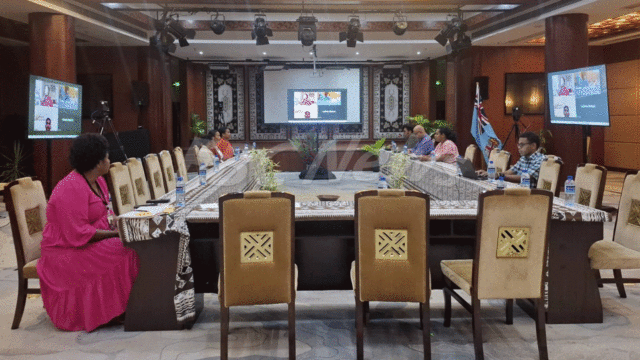
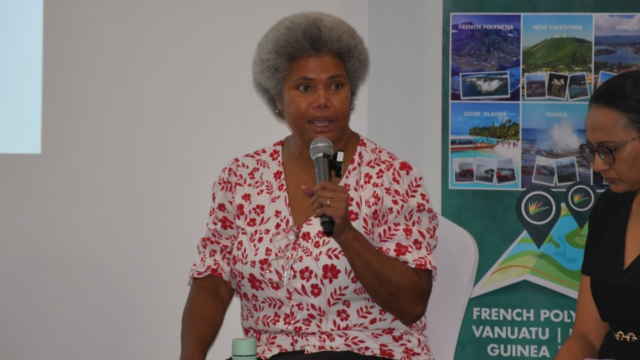
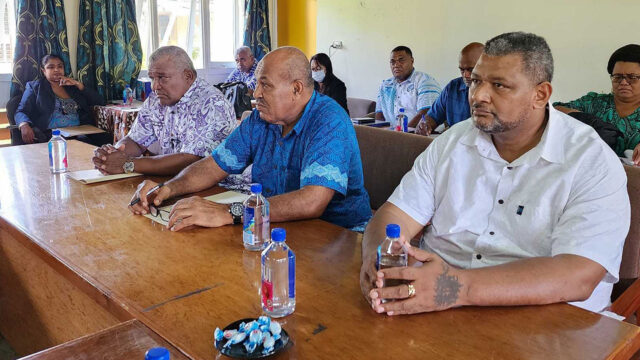
Education Commissioner Anaseini Raivoce raised this concern during the Education Commission’s presentation to the Standing Committee on Justice, Law and Human Rights while submitting recommendations on the Education Bill.
Raivoce emphasised that the authority must function like other statutory bodies, free from political influence over curriculum and assessment decisions.
“The independence would mean that, like the other statutory bodies, so that we don’t have any other interference from government. For instance, what is happening, what we have seen, one government comes in reintroduces scaling, another government comes in, removes scaling. So that is what (we are trying to do so that there is no interference.”
Raivoce said the chairperson should not be the Permanent Secretary, though the secretary may remain a member. Board members should include experts in early childhood, secondary education, governance, and law.
The Commission criticised the bill for leaving the authority without legal personality and placing it under the chairmanship of the Permanent Secretary, which they said undermines its autonomy.
The Commission recommended that the authority be established as a body corporate with perpetual succession, governed by a board of seven to nine members appointed through a transparent, skills-based process.
An independence clause should be included, the commission said, to ensure the authority operates free from ministerial direction on curriculum, assessments, and examinations. It also recommended a finance division similar to the Higher Education Commission, with audited financial statements reported to Parliament under the oversight of the Auditor General.
Standing Committee member Jone Usamate questioned the need for a separate body with its own staff.
Raivoce responded that independence is crucial to prevent interference and maintain consistent standards.
She cited New Zealand and Australia, where curriculum authorities operate independently even though ministers appoint their boards.
The commission reiterated that education must have its own pathway.
The National Curriculum and Assessment Authority should function as a strong, autonomous body overseeing curriculum and assessment free from political influence.
Stream the best of Fiji on VITI+. Anytime. Anywhere.