 Reuters

[Source: Reuters]
The admiral in charge of U.S. military forces in Latin America retired two years early, amid rising tensions with Venezuela that include Wednesday’s seizure of an oil tanker and more than 20 deadly strikes on suspected drug-smuggling boats.
Three U.S. officials and two people familiar with the matter told Reuters that Admiral Alvin Holsey was pushed out by Defense Secretary Pete Hegseth.
Two officials said Hegseth had grown frustrated with Southern Command as he sought to flex U.S. military operations and planning in the region.
One official confirmed that discussion of whether Hegseth would dismiss Holsey surfaced roughly two weeks before the surprise announcement of his departure.
Holsey announced on October 16 his intention to step down in December.
He has not publicly explained his early retirement.
In remarks at his retirement ceremony on Friday morning, he was upbeat as he reflected on his 37-year-long career.
Speaking between rows of palm trees at Southern Command headquarters in Miami, he called on the United States to keep standing by fellow democracies that share U.S. values.
“We must always be there for like-minded partners, like-minded nations who share our values: democracy, rule of law and human rights,” Holsey said.
Some officials have privately speculated that he opposed the recent U.S. strikes on suspected drug vessels in the Caribbean.
However, in a closed-door meeting with senior lawmakers on Tuesday, Holsey insisted that his decision had nothing to do with the operations in his command, according to comments by Republican Representative Mike Rogers published in Politico.
Holsey formally handed over command to his deputy, Air Force Lieutenant General Evan Pettus, during a ceremony that extolled his accomplishments in uniform.
“You’re an extraordinary human who has always led with your heart, your head and gone all in (for) every single day of your service,” said General Dan Caine, who became the chairman of the Joint Chiefs of Staff in April after his predecessor was fired.
Pettus will serve as acting head of U.S. Southern Command.
One source familiar with the matter said President Donald Trump is expected to nominate Lieutenant General Frank Donovan, vice commander of U.S. Special Operations Command, as Holsey’s successor, subject to Senate confirmation. The source cautioned that the nomination has not yet been formalized and could change.
Holsey’s premature retirement is rare but not unprecedented.
In 2008, Central Command commander Admiral William Fallon also retired a year into his term overseeing U.S. forces in the Middle East after making comments about Iran and other issues that irked the Bush administration.
Holsey is the latest in a series of senior officers to leave their positions since Hegseth took over the Pentagon.
Some departures have been abrupt, including those of the chairman of the Joint Chiefs of Staff, C.Q. Brown, and the top naval officer, Lisa Franchetti, who was the first woman to hold that post.
MONROE DOCTRINE REVIVAL?
The Trump administration has signalled a major shift in foreign policy over the last few months.
A strategy document released this week called for reviving the 19th-century Monroe Doctrine, which declared the Western Hemisphere to be Washington’s zone of influence.
A major U.S. military buildup of warships in the Caribbean – including the deployment of an aircraft carrier strike group – has underscored that policy shift, along with new U.S. training deployments to a revived jungle school in Panama.
Trump has also intensified pressure on Venezuelan President Nicolas Maduro, a close ally of Russia and China whom Washington accuses of drug trafficking.
Maduro denies the allegations and has said the U.S. military buildup aims to topple him and seize Venezuela’s oil resources.
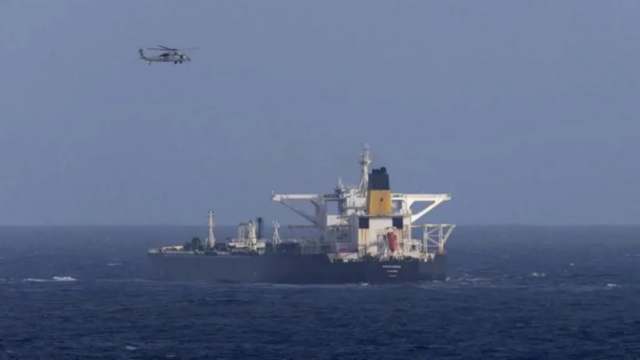
The U.S. Coast Guard’s seizure of an oil tanker on Wednesday was the first interdiction of Venezuelan crude amid U.S. sanctions that have been in force since 2019.
Reuters reported on Thursday that the United States is preparing to intercept more ships carrying Venezuelan oil.
Trump’s military operations against alleged drug smugglers have been under intense scrutiny following a September 2 decision to launch a second strike on a suspected drug boat in the Caribbean.
The Defense Department’s Law of War Manual forbids attacks on combatants who are incapacitated, unconscious or shipwrecked, as long as they abstain from hostilities and do not attempt to escape.
The manual cites firing upon shipwreck survivors as an example of a “clearly illegal” order that should be refused.
The Trump administration has framed the attacks as a war with drug cartels, calling them armed groups and saying the drugs being carried to the United States kill Americans.