 Reuters
[Source: Reuters]
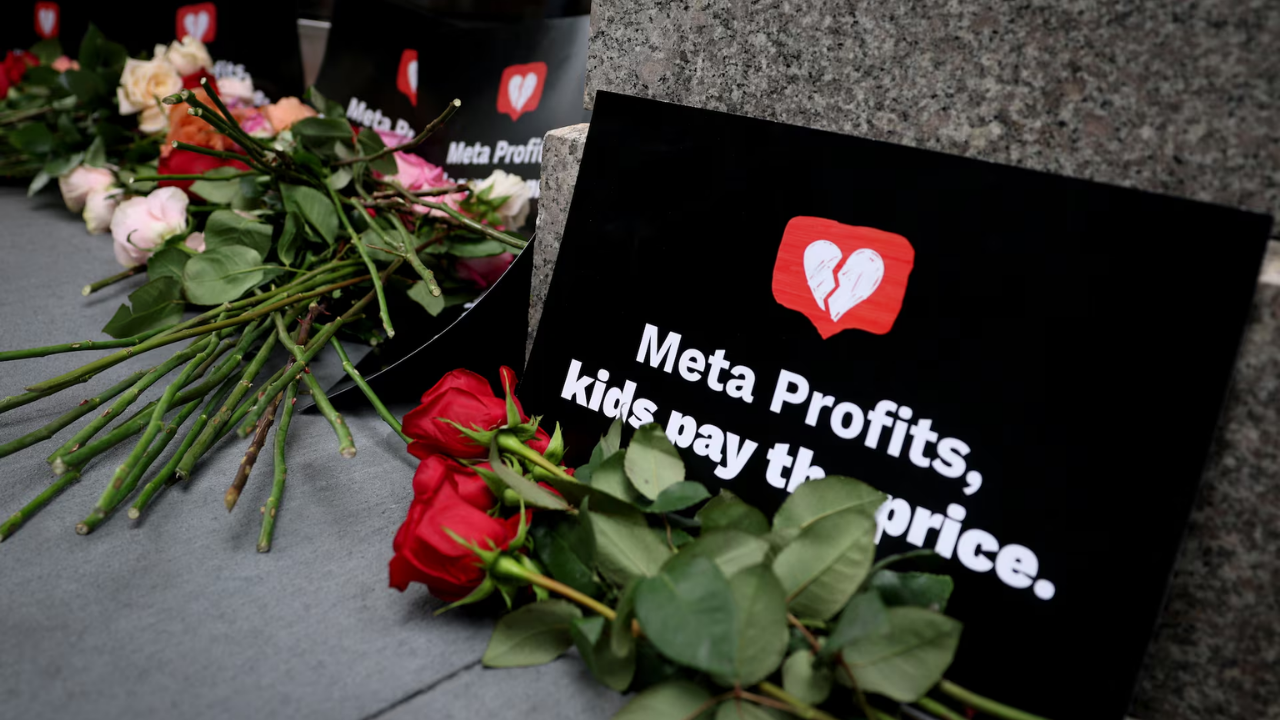
The U.S. state of New Mexico on Monday asked a judge to declare Meta Platforms (META.O), opens new tab a public nuisance, order the company to pay $3.7 billion and overhaul its Facebook, Instagram and WhatsApp platforms to protect young users.
“Across the country, children are begging for help,” David Ackerman, an attorney for New Mexico, told the judge in opening statements.
“You will hear testimony that confirms there is a mental health crisis, and that it is fueled and caused by social media. We need to fix it.”
The case stems from a lawsuit filed by New Mexico Attorney General Raúl Torrez, a Democrat, accusing Meta of designing its platforms to addict young users and failing to protect children from sexual exploitation.
The trial, which Reuters is monitoring on Courtroom View Network, marks the second phase of New Mexico’s lawsuit against the social media company.
A jury in March found Meta violated the state’s consumer protection law by misrepresenting the safety of Facebook, Instagram and WhatsApp for young users and ordered the company to pay $375 million in damages.
Meta has said it will appeal that verdict.
Meta has said it has taken extensive measures to ensure its young users are safe.
A PUBLIC NUISANCE TEST
During this phase, the judge will decide whether the company’s platforms have created a “public nuisance” under New Mexico law — a finding that would allow him to order wide-ranging remedies aimed at curbing alleged harms to young users.
The case is being closely watched as states, municipalities and school districts across the country pursue similar claims seeking to force changes at the industry level.
Public nuisance claims traditionally have targeted conduct that endangers public health or safety, such as blocking roads or polluting waterways, but state governments have increasingly invoked them in litigation involving tobacco, opioids, climate change and vaping.
Alex Parkinson, an attorney for Meta, told the judge in opening statements that the state has not alleged the company interfered with a so-called “public right,” like access to air or water. Instead, New Mexico’s case is just based on injuries suffered by individual users, he said.
If social media is a public nuisance, “then so is alcohol because of drunk driving, so are cell phones because of distracted driving, so are supermarkets that sell junk food,” Parkinson said.