 Josefa Sigavolavola

[file/photo]
Centralised vote counting is not compulsory under Fiji’s amended electoral laws; the independent Electoral Commission retains the authority to determine whether votes are counted at polling stations or designated counting centres.
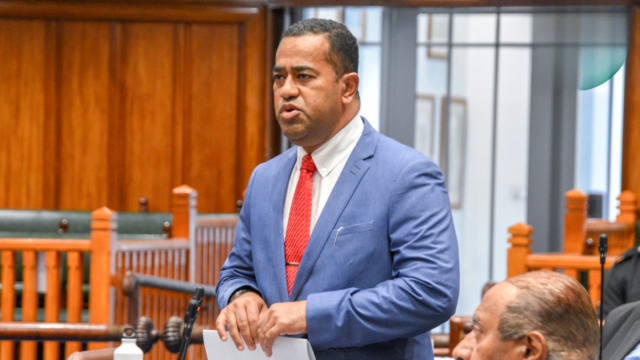
Minister for Elections Filimoni Vosarogo clarified this responding to concerns raised by civil society organisations regarding centralised counting under the Electoral (Amendment) (No. 2) Act 2026.
Vosarogo acknowledged the concerns, emphasising that transparency, accountability, security, and public confidence remain fundamental to free, fair, and credible elections.
He stated that inserting Section 89A into the Electoral Act 2014 does not abolish polling-station counting or require all ballot boxes to be transported centrally.
Instead, the amendment allows the Electoral Commission to approve counting at designated centres and establish special procedures, considering election circumstances and logistical requirements.
Vosarogo stressed that election integrity depends not on where votes are counted, but on safeguards governing the transportation, handling, storage, verification, and counting of ballot papers.
He added that centralised counting could allow agents, observers, and the media to scrutinise consistency across roughly 700,000 nationwide votes, compared with about 650 at an individual polling station.
However, these potential operational advantages do not mean centralised counting is appropriate in every circumstance.
He acknowledged that concerns surrounding the transport and custody of uncounted ballots are legitimate operational matters that must be addressed.
Where adopted, transparency must extend from closing polling stations and sealing ballot boxes through transport, receipt, verification, counting, and declaring results.
Vosarogo reaffirmed that the Electoral Commission is an independent, non-partisan constitutional body mandated under Section 75 of the 2013 Constitution to conduct free and fair elections.
While Government provides the legislative authority for administration, the Commission independently determines how that authority is exercised.
The amendment provides operational flexibility without removing requirements for appropriate electoral safeguards, transparency, and independent scrutiny.
The Government maintains that public confidence requires clear procedures, effective security measures, and accountability at every stage of the process.
Ultimately, every ballot paper must be accounted for, protected, accurately counted, and subject to independent scrutiny regardless of where counting takes place.