 Reuters
source: Reuters
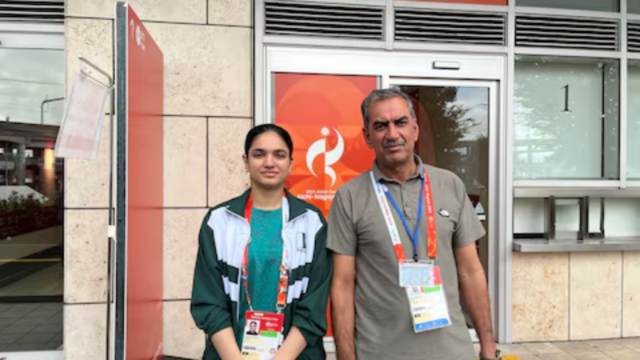
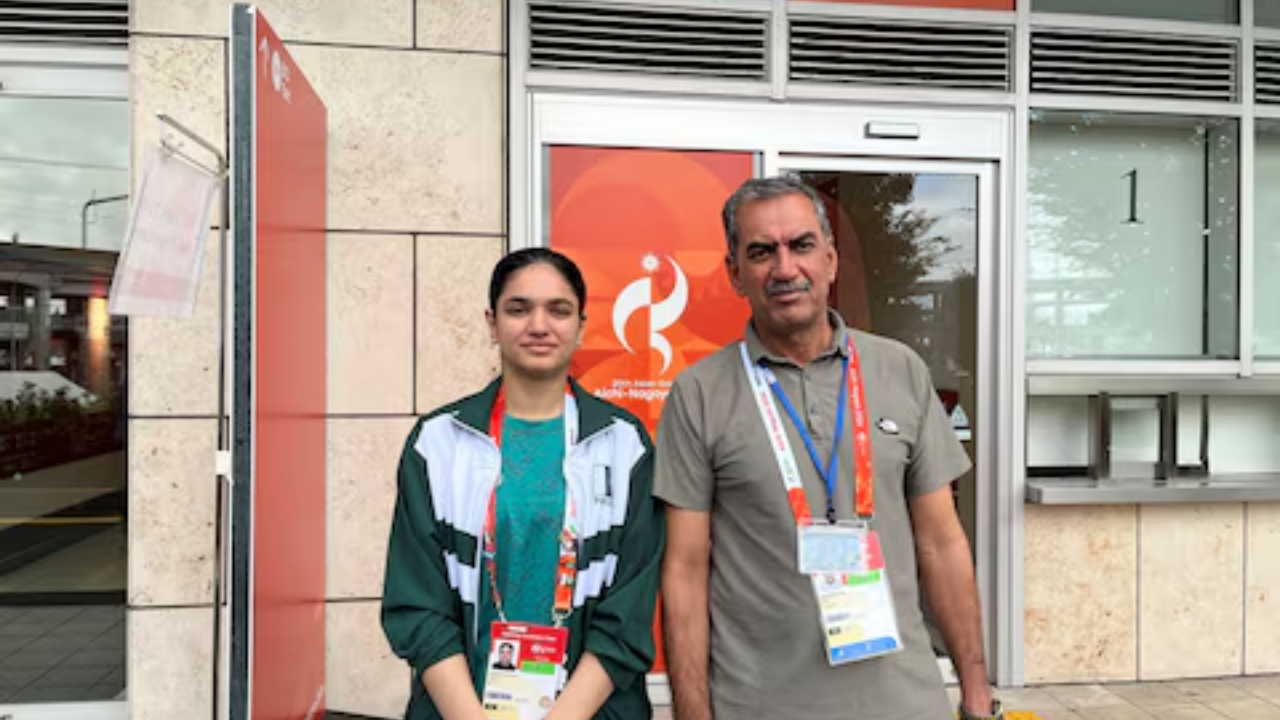
Inside the glass walls of a squash court, Sana Bahadar lets her racquet do the talking. Outside, the 20-year-old Pakistani communicates through a combination of sign language and lip reading.
Deaf and non-verbal since birth, as are her two younger brothers, Sana struggled to communicate until squash gave her a powerful medium of self-expression.
A round-of-32 defeat at the hands of Iran’s Najmeh Boushehrizadeh cut short her Asian Games debut but simply competing at the Aichi-Nagoya Games marks a monumental achievement.
“She’s a role model not just for kids who can’t hear or speak,” her father Sher Bahadar, who runs a printing business in Peshawar, told Reuters as Sana scrolled on her phone beside him at the Kinjo Futo Arena.
“In our family circles, she’s seen as an example of where talent and commitment can take you.”
That journey has demanded heavy sacrifices.
Bahadar sold two of his printing machines this year to fund Sana’s overseas trips. With the demands of accompanying her abroad, his business has dropped by 60% — a reality he acknowledged with a wry smile.
“I have no regrets though. Because of her, I get to travel and meet so many great athletes. We are absolutely proud of her,” he said.