 Reuters
[Source: Reuters]
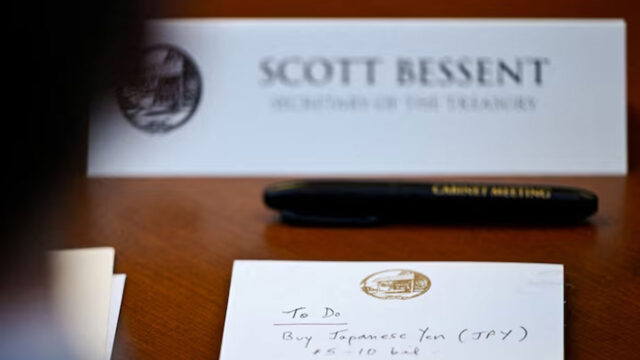
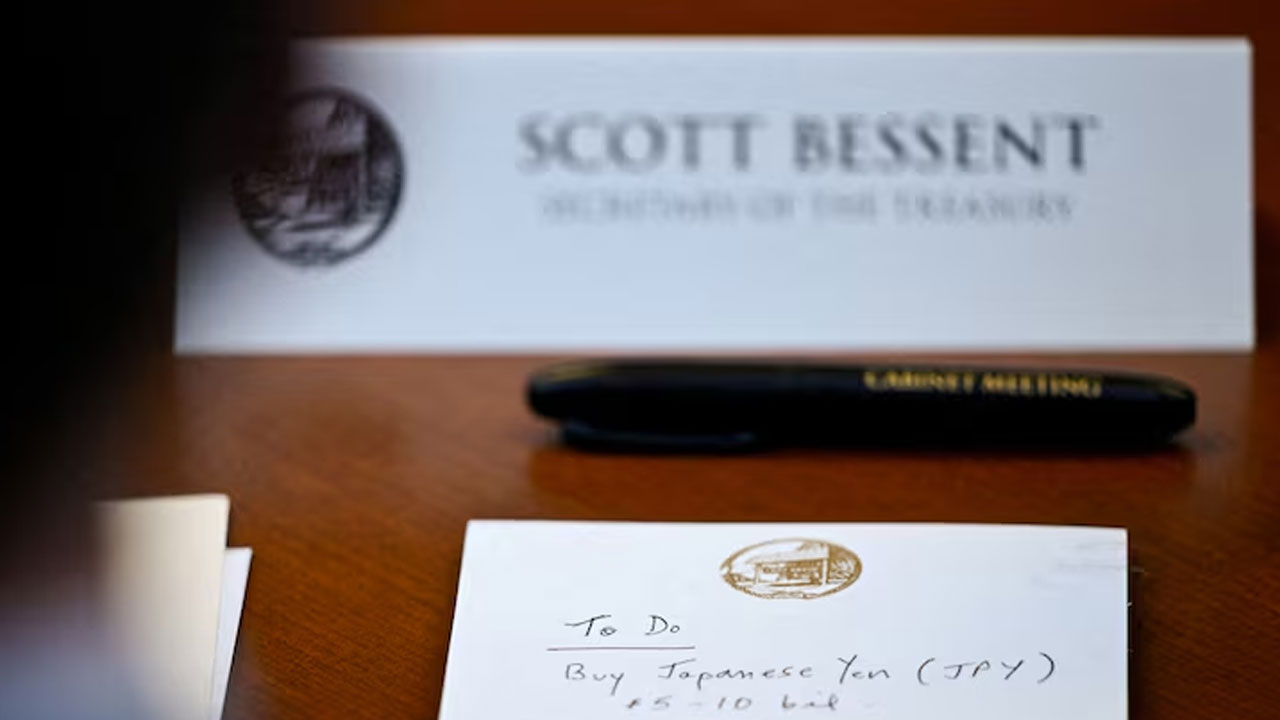
The U.S. will do “whatever it takes” to support Japan’s effort to stabilize the yen, Treasury Secretary Scott Bessent said on Tuesday, following last week’s joint intervention by Washington and Tokyo to buy the Japanese currency.
“We will do whatever it takes to support them in a way that helps the American economy, the American taxpayer,” Bessent said in an interview on CNBC two days after confirming the Treasury had joined Japan’s finance authorities in an intervention on Friday to prop up the yen.
Bessent said the yen’s substantial undervaluation could trigger other economic problems or competitive devaluations of other currencies, “which is unhealthy.”
Prior to Bessent’s remarks, the yen JPY= had dipped to 158 to the dollar from Monday’s immediate post-intervention levels of about 156.
After his comments, the yen recovered slightly to 157.55, still well off recent 40-year lows of about 164.
The U.S. Treasury chief did not discuss the mechanics of U.S. participation in the joint intervention with Japan on Friday.
He said he was happy that the Japanese government wants to use a pandemic-era Federal Reserve backstop for key central banks, the Foreign and International Monetary Authorities Repo Facility, which would allow the Bank of Japan to borrow up to $60 billion to support the yen.
“The FIMA facility was done in 2020, the size of the bond market was much smaller then, so I think it would be reasonable for the Fed to consider upsizing the facility,” Bessent said, adding that its purpose was to “protect the U.S. economy and keep any volatility offshore.”
Regarding U.S. sales of euros to buy yen, Bessent said he had reassured European partners including central banks that the U.S. move was “just a reallocation of our resources.”
“Seems to me the euro is much closer to an equilibrium price,” Bessent said. “I’m not going to talk about where the euro should or should not trade, but it’s really the substantial undervaluation of the yen here and the policies that the Takaichi government is putting in place to change that.”