 Reuters
[Source: Reuters]
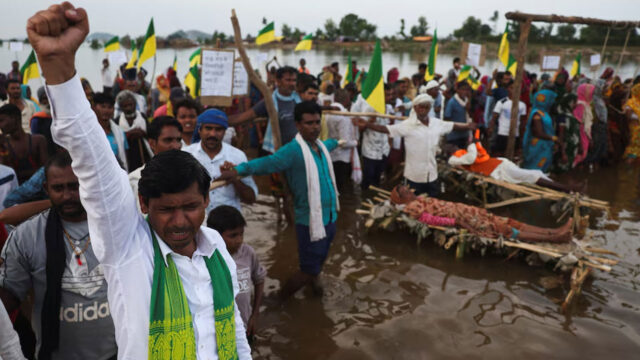
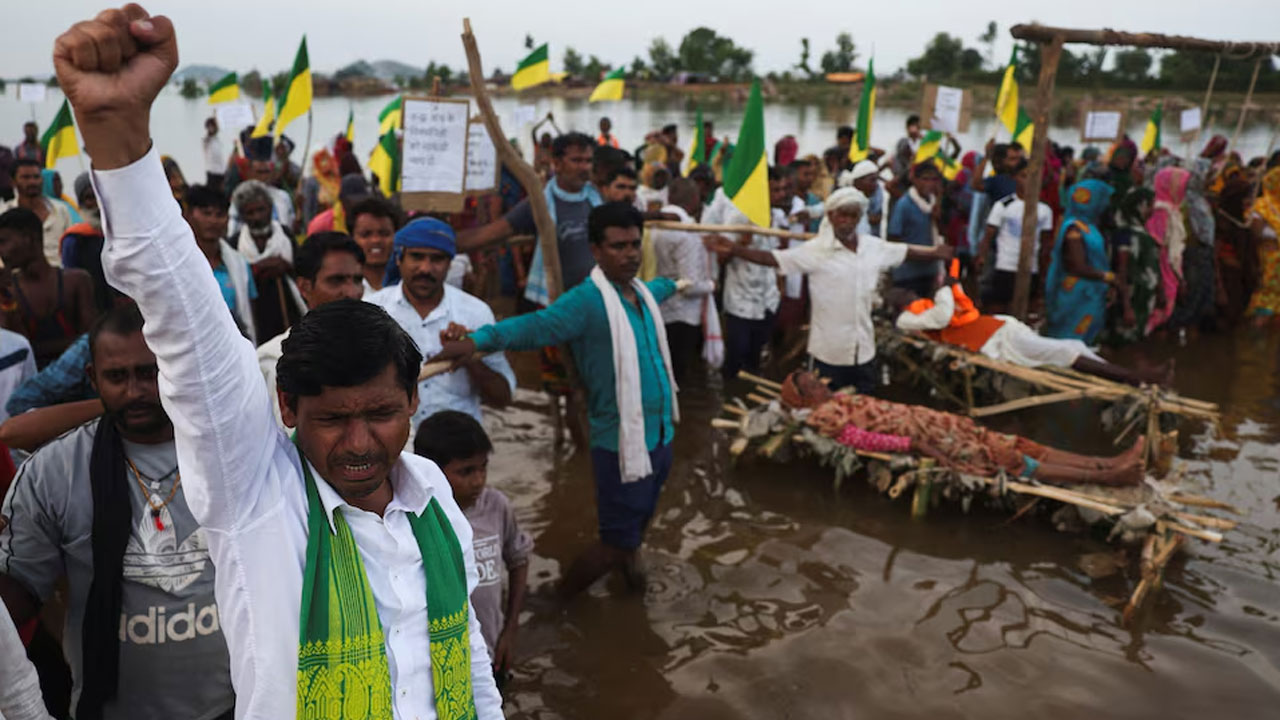
Standing knee-deep in the Ken River, with mud smeared on her face to symbolize a connection to land her family has farmed for more than a century, Bitti Bai Kondar is among hundreds of tribal residents voicing anger over an $87 billion government project to link India’s rivers.
The mother of four adult sons, who are all protesting with her, has watched as rising water from work on the project has flooded her village. But the protesters say they’d rather die than leave their ancestral home without better compensation.
“The government is taking our land and water without giving us another place to live,” said Kondar, who is among scores of women who have shown their defiance by lying on mock funeral pyres.
“They’re digging up our soil to build their dam, but they’re not giving us enough compensation to rebuild our lives.”
The dispute is an early test for India’s ambitious plan to link some 30 rivers nationwide, which has been decades in the making but only gathered momentum in recent years, championed by Prime Minister Narendra Modi.
The aim is to redistribute water to drought-prone regions, boosting food security by aiding tens of millions of farmers in a country where agriculture remains a major employer. Critics say the programme risks uprooting communities and damaging fragile ecosystems.
Connecting Madhya Pradesh’s Ken River to Uttar Pradesh’s Betwa River is phase one, with a cost of about $4.6 billion.
The government has offered residents along the Ken River in Panna district at least 1.25 million Indian rupees ($13,000) per hectare, more than double the initial offer of 500,000 rupees.
Usha Parmar, the district administrator, said compensation to over 90% of people had already been paid.
However, some residents argue the payments don’t cover all their losses.