 Nikhil Aiyush Kumar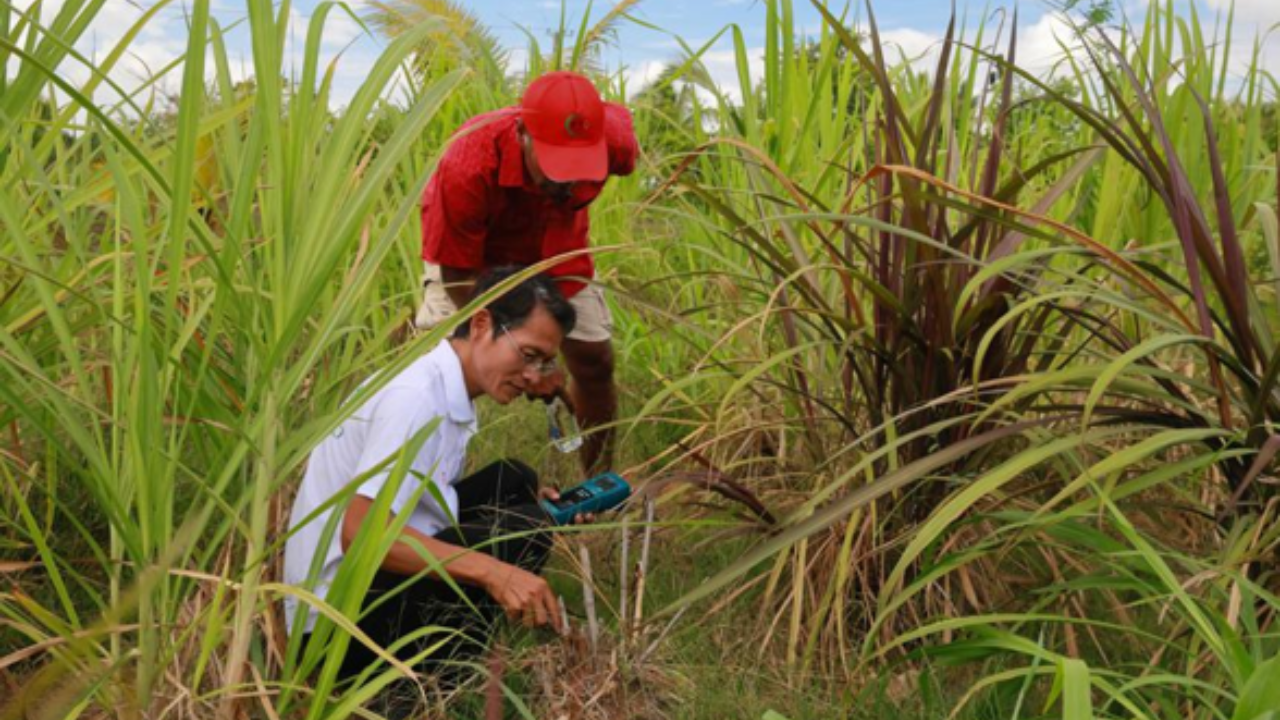
[Source: Supplied - Lin Xingsheng (left), team leader of the China-Fiji Juncao Technology Demonstration Center, tests salinity levels before the treatment of saline-alkali soil by planting Juncao in Nadi, Fiji.]
China’s Juncao technology could offer new opportunities for Fiji’s agriculture sector, particularly in supporting food security, rural livelihoods and climate-resilient farming.
The technology uses grass to cultivate edible fungi such as mushrooms, while the grass can also be used as feed for livestock.
It is one of the practical development projects being promoted under China’s Global Development Initiative, which China says is aimed at supporting developing countries through technology sharing and skills development.
More than 130 countries and international organisations have endorsed or participated in GDI-related cooperation programmes, with more than 1,800 livelihood-focused projects implemented globally.
China says more than 200,000 people have received professional training through these programmes.
For Fiji, Juncao technology could provide farmers with another option to diversify production and generate additional income, particularly in rural communities.
The technology could also contribute to food security by supporting local mushroom production and providing an alternative source of livestock feed.
With Fiji facing the impacts of climate change, agricultural technologies that make better use of available land and resources could also help strengthen the resilience of farmers.
The potential benefits extend beyond production, with skills training and technology transfer providing opportunities for farmers and agricultural workers to develop new expertise.
As Fiji continues to strengthen agricultural productivity and reduce reliance on imported food, technologies such as Juncao could form part of broader efforts to build a more sustainable and resilient farming sector.
The focus now is on how such technologies can be adapted to Fiji’s local conditions and translated into practical benefits for farmers and rural communities.