 Reuters
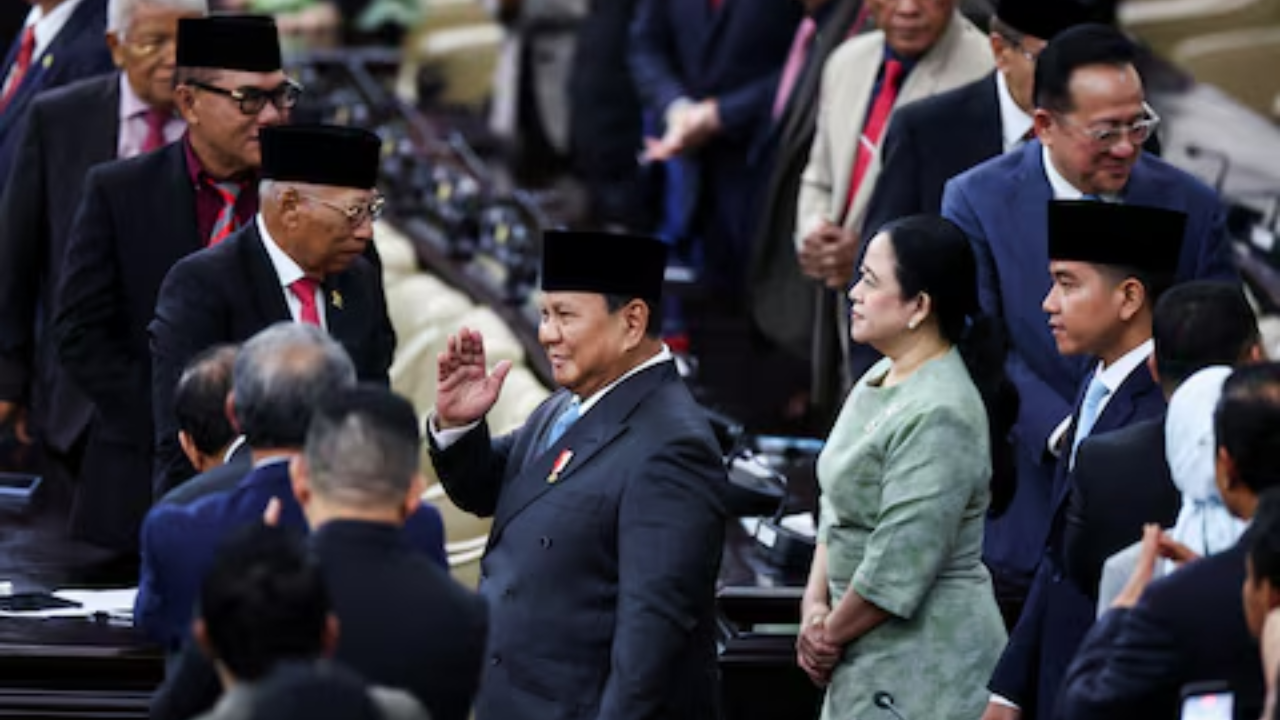
Source: Reuters
The Indonesian parliament passed revisions to the country’s national police law on Tuesday that allow serving police officers to accept posts in the civilian government.
The amendments came a year after parliament revised the country’s military law, which allocated more civilian posts to soldiers.
Since taking office in 2024, Prabowo Subianto has expanded the military’s role in civil affairs, using it to help develop his ambitious free meals and food self-sufficiency programmes, in which the police have also been involved.
The former special forces commander has also appointed senior police and military officers to his administration.
The law was passed unanimously by a plenary session of parliament.
Under the new law, serving police officers do not have to resign before they are appointed to other state institutions or ministries outside the National Police, including civilian posts, as long as the positions are related to the tasks and functions of the police, according to a copy of the bill seen by Reuters.
The positions are those related to public security and order, law enforcement, protection, care and services to the public in ministries or state agencies, it said.
Active police officers may also fill posts outside its organisation based on requests from the president, ministries or state agencies, as long as their expertise is needed, according to the bill.
Sarifuddin Sudding, a member of the parliamentary committee involved in deliberations over the bill, told Reuters that police officers do not have to resign because their expertise is needed by the administration.
“A more responsive and adaptable legal framework is urgent to ensure that National Police can perform their duties effectively,” law minister Supratman Andi Agtas said in the plenary session.
The revisions also extend the mandatory retirement age for police officers, including the national chief, by one year.
“The government seems to replicate what they have done with Military Law,” said Haeril Halim from Amnesty International Indonesia, adding that it was “a sign of authoritarianism where defence and security forces are used to back those in power.”
This law also contradicts last year’s Constitutional Court ruling that obliged police officers to resign if they take on positions outside the force.
Placing active police officers in ministries and state agencies is unconstitutional and will harm the professionalism of the police and disrupt career paths and the merit system for civil servants, Muhammad Isnur from Indonesia’s Legal Aid Foundation said.