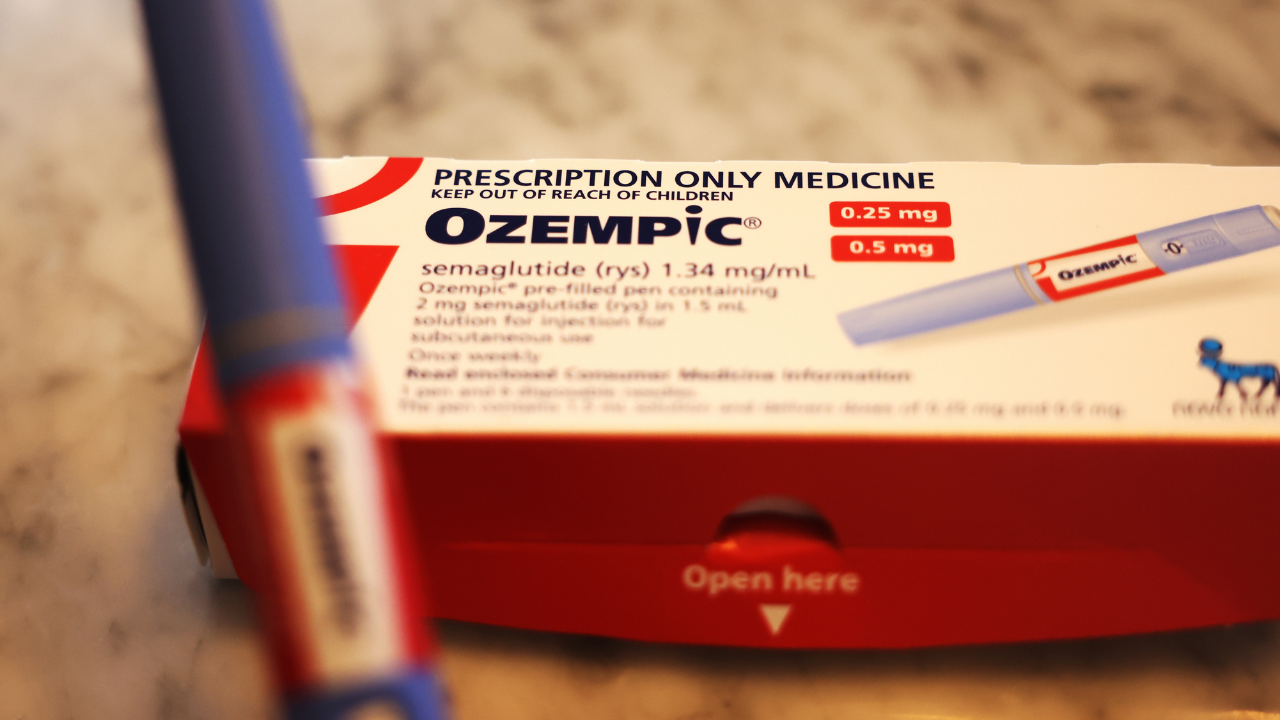
An Ozempic pen is seen in Sydney. [Photo Credit: AAP Image]
Skinny culture is trending again, according to the internet.
The rise of GLP-1 medications has made weight loss more attainable for many people.
But has it created yet another stigma for women when it comes to their bodies?
“There’s been memes about how skinny is trending again; mean girl is trending again – forget skinny,” health advocate Yemi Penn told AAP.
GLP-1 medications such as Ozempic and Mounjaro were designed for diabetes but have been discovered to reduce appetite and slow down digestive systems.
Dr Penn has been sharing her lived experience with GLP-1 online to break down and dispel myths about the medication.
She believes she’s had perimenopause symptoms since her late-30s and has been taking a low dose of GLP-1 for 18 months, alongside a fitness plan.
“I’ve grown up in the diet culture,” she said.
“I’ve done the apple cider vinegar diet, all of that. I am of that generation.
“I can understand the shame that people have. Shame dies in spaces where our stories are told.”
Dr Penn said she did not feel the stigma around the medication because she had done a lot of work to heal her trauma – but she said she saw it everywhere.
“It’s triggered cultural trauma on the female body, and how much we feel we need to have an opinion on it,” she said.
She said GLP-1 helped her fuel herself with better-quality meals without food cravings getting in the way.
It also helped her finish her first book, Bridge, which is about better understanding her body.
“My body will change again, but now I know there are some foods that my body no longer likes,” she said.
“I got so dense that I couldn’t feel the discomfort, or I ignored it, even though my body was telling me.”
She will discuss her experiences on a panel with GP Angela Kwong on Tuesday in Sydney at the Women’s Health and Wellbeing Summit by Women’s Agenda.
“There are many medical reasons why a doctor and a patient might make that decision to improve their weight … and there’s a lot of judgment out there,” Dr Kwong said.
Most of her female patients taking GLP-1 are doing so for health reasons, including to improve fertility, if they are pre-diabetic or experiencing perimenopause.
She is looking forward to dispelling some of the myths around GLP-1 to a broader audience.
“I’m excited for the everyday Australian woman to be part of this conversation,” Dr Kwong said.
“Talking about weight can make people feel sometimes a bit uncomfortable because there is a lot of stigma, a lot of weight discrimination, because people have often been stuck for a very long time, and try to manage it themselves.”
AAP’s journalist is attending the summit with travel assistance from Women’s Agenda.