 Praneeta Prakash
[Photo: FILE]
The 2025 Social Cohesion and Reconciliation Score Index Assessment has highlighted strong unity, but ongoing social and gender challenges.
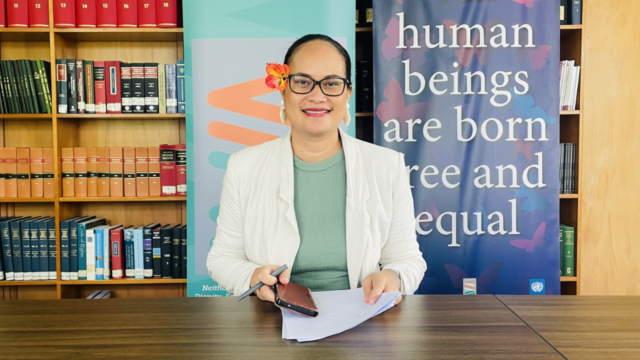
Minister for Women, Children and Social Protection Sashi Kiran delivered her ministerial statement on the findings in parliament today.
Kiran says the study found that Fiji has strong social cohesion overall and more than 80 percent of iTaukei and Indo-Fijian respondents say they accept other communities within their families and communities.
It also found strong national pride across all groups, showing that Fiji’s identity remains a unifying factor.
However, Kiran says the report warns that stereotypes and misunderstandings still exist.
She says many iTaukei respondents believe Indo-Fijians do not respect traditional culture, while many Indo-Fijians feel political and economic opportunities are not equal.
Kiran adds that the report found strong support for democracy, with 59 percent of people preferring it even if it involves delays and compromise and around 72 percent also support a multi-ethnic system of government.
However, she says about 40 percent of respondents agree to strong armed leadership to achieve a goal
The Minister further highlighted the strong and growing support for women in leadership, especially among young women and educated people.
She says in some areas, more than 80 percent support women holding leadership roles.
However, it also revealed serious concerns.
“The assessment reveals unacceptable levels of tolerance and acceptance of gender stereotypes and normalization of violence against women, particularly among young men. For example, over 70% of young men, 18 to 35 years, endorse beliefs and norms that normalize or justify violence against women under certain circumstances.”
Kiran says these attitudes reflect the deep infringement of harmful gender norms and the social acceptance of caution and silence.
She says this highlights the need for transformative, gender-responsive approaches and targeted engagement with young men to challenge norms, shift attitudes, and prevent violence.