 Litia Cava
These are designed to cushion households and essential services without weakening long-term fiscal stability. [Photo: FILE]
Complete removal of fuel duty across the board would result in a revenue loss of more than $150 million.
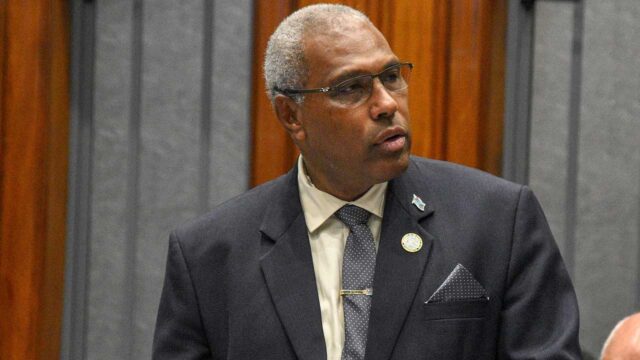
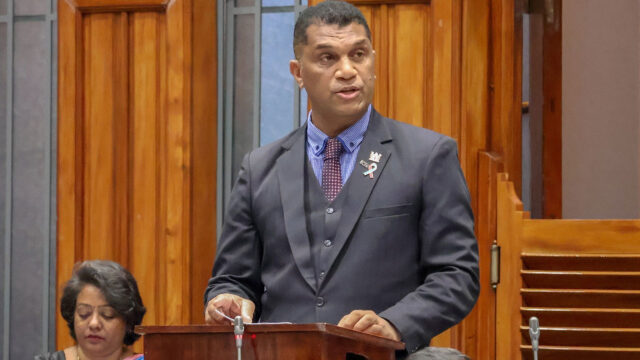
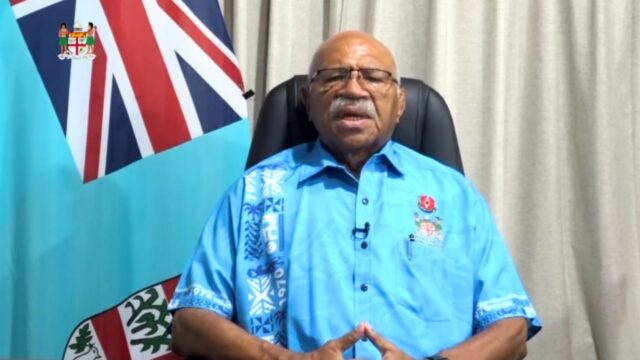
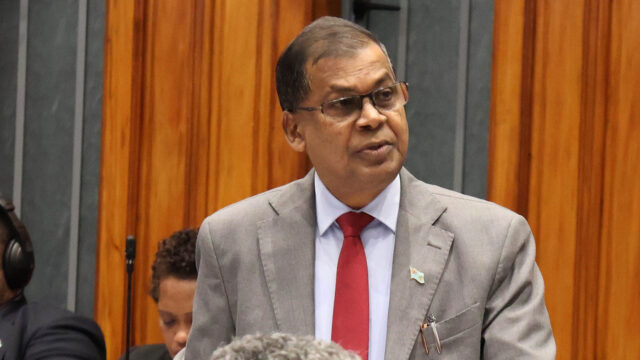
In his ministerial statement in Parliament this morning. Finance Minister Esrom Immanuel told Parliament this would materially weaken government’s ability to deliver essential services and support vulnerable communities.
He said the fiscal space was already under pressure. Rising global fuel prices and inflation are increasing demands on public spending. He said broad tax removal is not a viable option at this time.
“Government has adopted a more balanced, targeted and fiscally responsible approach. Mr. Speaker, sir, the question on the methodology used by FCCC in determining fuel prices.FCCC applies a lowest cost operator principle in setting fuel supply on a monthly basis.”
Instead, Immanuel said government has taken a balanced, targeted and fiscally responsible approach. Support is being directed to key sectors and households rather than removing revenue sources that fund core services.
A key part of his response focused on the fuel pricing system used by the Fiji Competition and Consumer Commission (FCCC). He defended the framework as transparent and rules-based.
Immanuel said the pricing formula is built from several global and domestic inputs. These include international refined fuel prices, exchange rates, shipping and freight costs, insurance, taxes and regulated wholesale and retail margins.
He added that Fiji relies heavily on imports and because of this, domestic prices are directly linked to global benchmarks.
At the centre of the system is the Mean of Platts Singapore (MOPS) benchmark. He states this is used to reflect regional pricing for refined petroleum products.
Immanuel said recent questions focused on whether FCCC changed its approach in April. He said there was no deviation from the established methodology.
He said the regulator only adjusted the pricing window. This was done to better reflect rapidly rising global fuel prices during a volatile period.
The Finance Minister said this ensured domestic prices were aligned with real-time market conditions. It prevented delays in reflecting sharp international price movements.
Immanuel said the FCCC framework was an agreed system between the regulator and fuel suppliers. It is designed to balance stability with market accuracy.
He said the objectives are clear. The system ensures fair returns for suppliers. It promotes transparency in pricing. It also protects consumers from excessive margins.
He said Fiji remains highly exposed as a small import-dependent economy. Global oil shocks quickly feed into local costs.
The Minister said government has therefore focused on targeted relief measures. These are designed to cushion households and essential services without weakening long-term fiscal stability.
In response, Opposition MP Alvick Maharaj accused the government of failing to respond early to mounting global pressures and leaving households under severe strain.
“We need to put people first. Fiji deserves proactive leadership, clear communication and structured relief and not broken promises.”
Maharaj said the government was hiding behind what he called a convenient shield of external shock and Middle East conflict, while insisting that there was no fuel crisis earlier in the year.
The Opposition MP pointed to assurances made by the Prime Minister that there would be no price increases for at least three months. He said this was quickly contradicted when the Fiji Commerce and Consumer Commission introduced sharp increases in regulated fuel prices.
He argued that the response has been reactive rather than strategic, describing fuel subsidies as ad hoc measures that fail to address the wider pressure on households and businesses.
Government allocations, including support for fuel and electricity costs, were described as late interventions that do not match the scale of the crisis.
Maharaj said inflation was now eroding wages and welfare adjustments before they reach families.
Parliament will continue its deliberations this afternoon.