
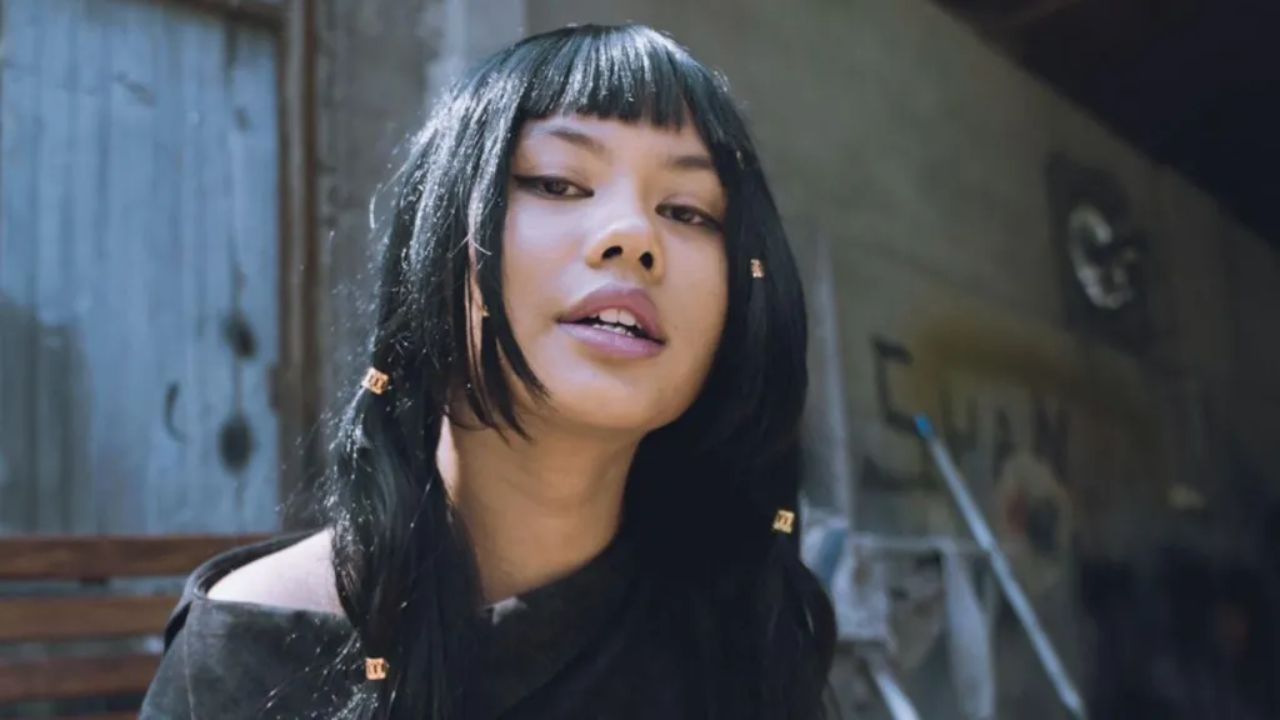
[Source: BBC News]
As a child, Reble often felt she was watching life from the sidelines. Now, at 24, the rapper has become one of the most compelling new voices in Indian hip-hop.
Hailing from the rain-soaked hills of Meghalaya in India’s northeast, Reble raps in English as well as Khasi and Jaintia – indigenous languages spoken by tribal communities in the region – and writes about distance, reinvention and survival with an emotional restraint that feels unusually deliberate.
Until recently, she was known mostly within Shillong’s close-knit music circles, in a city better known for rock bands, church choirs and old guitar legends than hip-hop.
Her breakout moment came with Dhurandhar, the Bollywood action film whose soundtrack introduced millions to her cool, clipped delivery.
On tracks like Run Down the City: Monica, Naal Nachna and Move – Yeh Ishq Ishq, Reble’s restrained verses cut through the film’s louder, more chaotic energy, quickly making her a fan favourite.
Her latest single, Praying Mantis, which was released this week, has once again made her a talking point, with fans dissecting the dark, hypnotic track online.
Reble’s rise reflects a wider shift, as artists from India’s northeast begin finding audiences far beyond the region. Wedged between Bangladesh, China and Myanmar, the northeast has long felt culturally distant from the mainland, with many from the region speaking of being treated as outsiders in their own country.
What makes Reble compelling is her refusal to soften herself for wider consumption – she resists explaining, translating or flattening her world into something more familiar.
“I don’t like anybody telling me what to do,” she tells the BBC.
That stubbornness – the sense of not quite fitting in – was shaped early in life.
Before the stage name, she was Daiaphi Lamare, a girl moving through boarding schools with what she now describes as a constant feeling of being out of place.
“Young Reble,” she says, laughing softly, “was always by herself. No friends. Sitting in one corner. Everybody was like, who’s that weird girl?”
The loneliness hardened into her personality. Teachers found her difficult; she disliked routine and authority. “I was a bit of a troublemaker,” she says.
Science became one of the few things that could hold her attention. An engineering degree in Bengaluru followed, though she speaks of it now like a temporary detour. “I knew I won’t be able to do a nine-to-five.”
That resistance eventually became the defining act of Reble itself.
The stage name, she explains, is less persona than alter ego – “a very personal rebellion”.
Rap gave shape to emotions she did not know how to organise earlier. “It became the perfect medium to express this feeling of being a misfit,” she says.
That tension still runs through her music. While many Indian rappers showcase big personalities and emphatic bravado, Reble’s style feels tighter and more restrained – less explosive anger and more something quieter and personal.
Her rhymes move instinctively between languages. Years spent away at boarding schools meant English gradually became dominant, though Jaintia – the language spoken at home – remains, as she puts it, “my emotional anchor”.
“When I write in Jaintia, it’s a very personal emotion,” she says. “But I’m also not very fluent in the language, unfortunately.”
The contradiction feels central to her work: local and global at once, deeply rooted yet emotionally detached.