 Reuters

[Source: Reuters]
In an age when viewers can drift from TikTok to Netflix to YouTube within minutes, the World Cup remains a rare thing: a live event that can capture the attention of a huge, simultaneous worldwide audience.
Banijay Live, part of Banijay Entertainment that is behind hit TV franchises including “MasterChef,” “Big Brother,” and “The Traitors,” is producing the tournament’s closing ceremony on July 19 at the New York New Jersey Stadium.
Marco Bassetti, its chief executive, says earning that kind of global attention is harder than ever — and keeping it depends on understanding local culture.
Bassetti, who began his career in the early years of commercial television in Italy, spoke with Reuters from London about the growing overlap between sport and entertainment, why global hits are increasingly difficult to develop and why local storytelling remains essential in a global media market.
I think the future will be like this. It does not make sense, when you do the Olympic Games or the World Cup, to do it just in one place, because there is so much you have to build and maybe you are not using it anymore after.
We trust local teams, local creatives and local people on stage. That is how the cultural piece comes through.
You began in television during the early years of commercial broadcasting in Italy. What did that moment teach you about audiences?
It was really the beginning of commercial TV in Europe. At that time, there was just public TV, (which) had no competition. If you wanted news, you got it from there. If you wanted a kids’ show, it was there. If you wanted something serious, it was there.
When commercial TV appeared, the world changed, because commercial TV was focused on what could be very interesting and attractive for the audience. It grew very quickly because public TV was not thinking that way.
Today, between Netflix and YouTube, there is competition over how much time you spend on one platform or the other. At that time, the question was: how much time are you going to spend on fantastic entertainment and shows, versus boring news or boring debate on public TV?
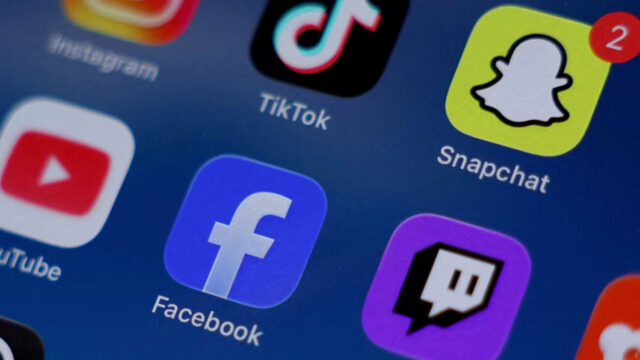
Now YouTube, TikTok, Netflix, Amazon and broadcasters are all fighting for the same hours. Is it a threat to television?
For us, because we have a huge catalogue and produce in so many languages and territories, social media gives us an opportunity to be direct-to-consumer. Not only in social, but on (streaming) platforms like Tubi, Pluto, Roku and Rakuten, which were not there before.
If you look at (hit shows like) “La Casa de Papel”(known as “Money Heist” in English) “Dark,” “Squid Game,” these were not produced because they were supposed to become global. They were produced because people believed they could fit a local culture, and then they became huge.
The huge competition is advertising. Today, more and more big brands are using influencers directly. That is the real competition, from my point of view.
If anyone can make reality content on a phone, what does a professional unscripted producer still bring?
When you have a good idea, sometimes you are not able to produce it just on a phone. If you have an idea to cook something, or do makeup, it is quite easy. But we are not doing these kinds of things.
Look at (American YouTuber) MrBeast. He was a creator and now he has become a producer, working with Amazon and creating a huge premium show. There is a moment when you have to shift, because it is not enough to do something just with a phone and your face.
There is a lot of user-generated content in cooking. But “MasterChef” is growing. Today, “MasterChef” is being produced in many countries where we did not produce it before.
Why has it become so hard to create a new global TV format?
First, a show has to be a local success — because if it is not a local success, it is difficult for it to travel.
The fragmentation today is huge. It is difficult to create a new format outside the ones that are already on air. “The Traitors” is the most recent one, and it has been extremely successful, (broadcasting) in around 30 territories. But it is not easy.
Nobody knows if the next format will come from Bosnia-Herzegovina or Los Angeles, London or St. Petersburg. Who knows? We try to do everything so that the next one will be ours.
When a format travels, does it spread one global culture, or does it become local each time?
I believe that you should adapt content, especially premium content. If you look at “MasterChef,” no “MasterChef” is similar to another. If you look at “Survivor,” “Big Brother” and all these kinds of shows, they are all adapted for the local market.
In the U.S., it was much more fiction and scripted. They create a series, a movie, a cartoon, and it goes all over the world as a matter of sales. Unscripted is different. You create a format and then you have to adapt that format to a local market with a local language.
Sometimes I see something that I do not understand, but the local guy understands it. With game shows, you say: “That is so weird. How is it possible that this game show is so successful there?” But look at the numbers, it is successful.
That is because my culture is different from another culture. I let local people make their decisions.
Young people in Milan, Paris, Sydney and Sao Paulo are all on the same global platforms. Are they becoming more similar in what they want?
If you ask me, no. Maybe there is a little bit more of a global culture, but they are still very different.
If I look at how different “Big Brother” was in the U.S. and in Spain 15 years ago, and if I look now, they are still very, very different.
Maybe 0.5% is a little bit more global, but 99.5% is still very different. So I do not see a lot of that.
If audiences are not becoming the same, what do global platforms change?
There are a lot of examples of very successful things that popped up locally and became global. I do not think that was part of the strategy, but that is what happened.
If you look at (hit shows like) “La Casa de Papel” (known as “Money Heist” in English) “Dark,” “Squid Game,” these were not produced because they were supposed to become global. They were produced because people believed they could fit a local culture, and then they became huge.
We produced a movie called “Culpa Tuya” (“Your Fault”) in Spain, and it became a big hit for Amazon. It was a small movie for the Spanish market. Sometimes local success can be global success too. Success is success.
Direct-to-consumer platforms have to localize more and more because they also have local competition. It is not like in the past, when the Americans produced their shows in the U.S. and sent them everywhere. Now, if platforms want to penetrate more deeply into local markets, they need more local shows.