 Litia Cava
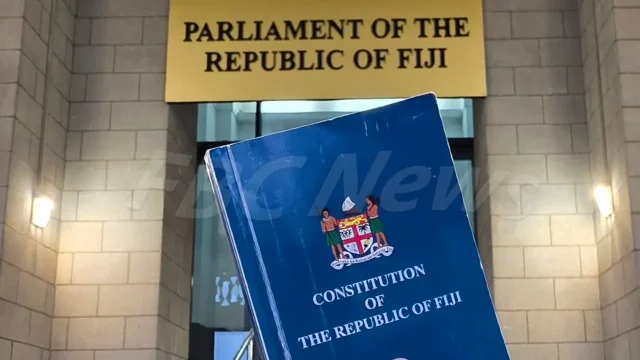
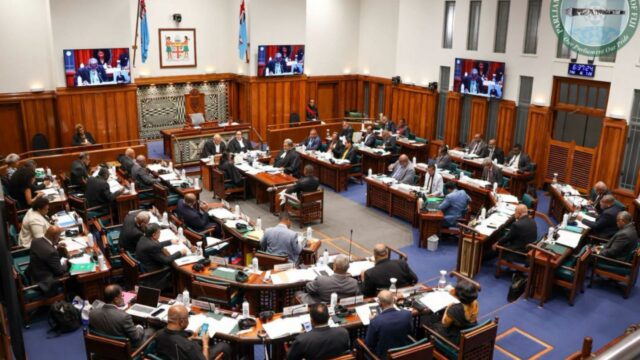
[Photo: PARLIAMENT OF THE REPUBLIC OF FIJI/ FACEBOOK]
Terrorist financing remains a low risk, but dirty money linked to drugs, organised crime and corruption remains a high threat.
The illicit funds generated by these crimes remain a major risk to Fiji’s financial system.
Financial Intelligence Unit Director Caroline Pickering assessed this while appearing before the Standing Committee on Economic Affairs to answer questions on the FIU’s 2024 Annual Report and operations.
“In its regulatory role, the FIU applies a risk-based approach to supervising financial sectors and businesses. We focus our supervision efforts on the high-risk sectors, namely the real estate sector and legal practitioners. Supervision is undertaken through off-site and on-site monitoring.”
Pickering identified illicit narcotics offences, organised crime, tax and customs-related crimes, environmental crime, particularly illegal fishing, bribery and corruption as the key criminal activities behind that risk.
The warning points to the scale of the challenge facing agencies tasked with following the money generated by crime.
Pickering points out that criminals can exploit several legitimate parts of Fiji’s financial system, with banking, payment services such as Digicel and Vodafone, remittance businesses, legal practitioners and real estate agents identified as high-risk sectors.
The FIU produced and disseminated 237 financial intelligence reports and products to law enforcement agencies in 2024.
Most were sent to the Fiji Police Force, FICAC and Fiji Revenue and Customs Service.
Police and FICAC use the intelligence to initiate new investigations or support existing criminal investigations.
FRCS uses it to identify undeclared income, recover unpaid taxes and support investigations into serious tax offences.
Pickering said the intelligence also helped law enforcement agencies trace and confiscate illicit funds held in local bank accounts.
However, the FIU says it does not consistently receive information on what happens after its intelligence is handed to enforcement agencies.
Pickering states the unit has no power to investigate or prosecute.
Its role ends with gathering, analysing and disseminating financial intelligence, while the receiving agency decides what action to take.
She adds that better feedback from those agencies is needed to assess the effectiveness of the intelligence and strengthen the FIU’s work.