 Nikhil Aiyush Kumar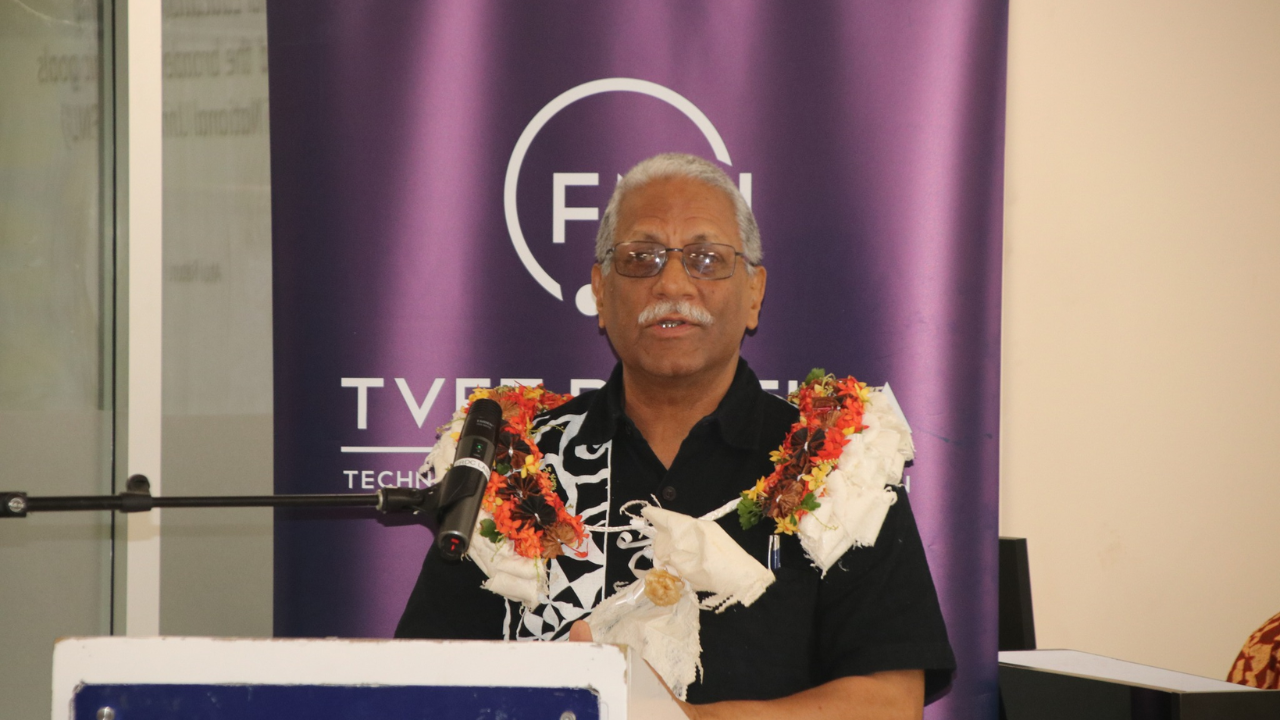
Professor Raturi addressing FNU students. [Picture: Supplied]
The Fiji National University’s Dean of College of Engineering and TVET Professor Atul Kumar Raturi warns that Pacific Island Countries remain highly vulnerable to global oil price shocks.
Since all petroleum products in the region are imported, any price hike adversely affects everything from electricity and transport to the final cost of goods.
Prof Raturi cautioned that while existing fuel shipments may temporarily cushion these increases, future imports will likely reflect higher global prices.
To reduce this dependence, he says Fiji must electrify key sectors like transport and manufacturing, supported by renewable sources such as hydropower, solar, and biomass.
He adds that while solar energy offers significant long-term benefits – with each megawatt in Nadi potentially saving 300,000 litres of diesel annually – it requires a robust grid and storage infrastructure.
“While Fiji has substantial hydropower resources, approximately 40 per cent of electricity is still generated using diesel and heavy fuel oil. This must be significantly reduced in line with Fiji’s Low Emissions Development Strategy.”
Professor Raturi adds that other options, including geothermal and wind energy, should also be explored based on local potential to ensure long-term energy security.