 Apenisa Waqairadovu
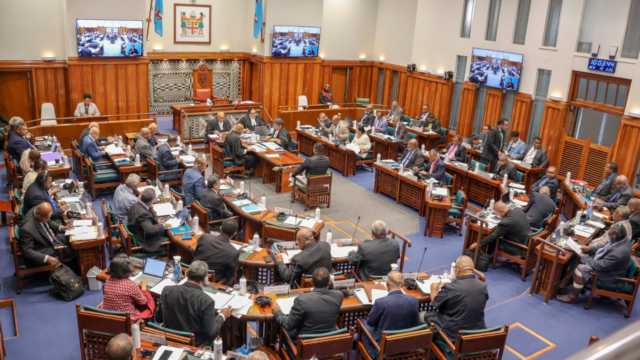
The Commission says that a system that returns members from defined constituencies will give voters that access while a proportional party-vote element preserves overall fairness. [Photo: FILE]
The Electoral Law Commission supports a reduction of the five percent threshold in the electoral system, which it considers high by international standards.
The Commissioners recommend a transition to a mixed-member proportional system using closed party lists and a reduced two percent seat threshold.
In their joint submission to the Constitution Review Commission on the electoral provisions of the 2013 Constitution, the Commissioners say that the current system — a single national electoral roll, open-list proportional representation, and a five percent threshold — is entrenched in the Constitution itself, so a change of this character is a matter for the Commission of Review.
It says that the specific seat-allocation formula, the d’Hondt method, is set not by the Constitution but by the Electoral Act 2014, and could be altered by ordinary legislation.
The Commission says that a lower threshold preserves a greater proportion of votes cast and gives effect to the choices of citizens who support smaller parties, who are presently left without a voice in Parliament.
The Commission also sees clear merit in a system that combines direct constituency representation with proportional party representation, so that every voter has an identifiable local member while the composition of Parliament continues to reflect the national party vote.
It says that the New Zealand MMP model, refined over three decades, is a useful reference for the Commission of Review’s consideration.
The case for a local link is grounded in the Commission’s and the FEO’s own experience.
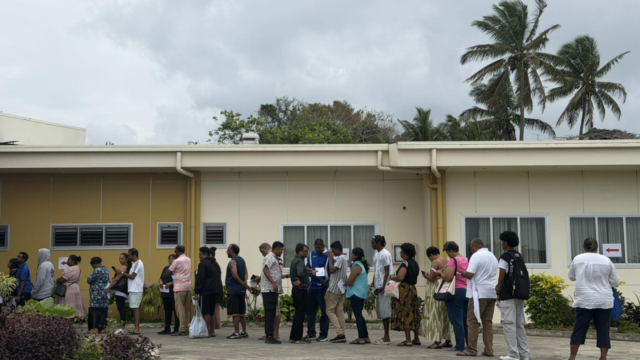
It says that in the public consultations, and as recorded in the 2022 General Election Joint Report, voters repeatedly said they had no idea who, if anyone, represented them. Under a single national constituency, members of Parliament represent no particular locality, and international research indicates that voters engage more readily when they have some form of direct access to an elected representative.
The Commission says that a system that returns members from defined constituencies will give voters that access while a proportional party-vote element preserves overall fairness.
A detailed design must be adapted to Fiji’s population, geography, and diversity.
With due consideration of the above, the final choice of system and of the precise threshold figure remains a matter for the Commission of Review and Parliament.