 Reuters
[Source: Reuters]
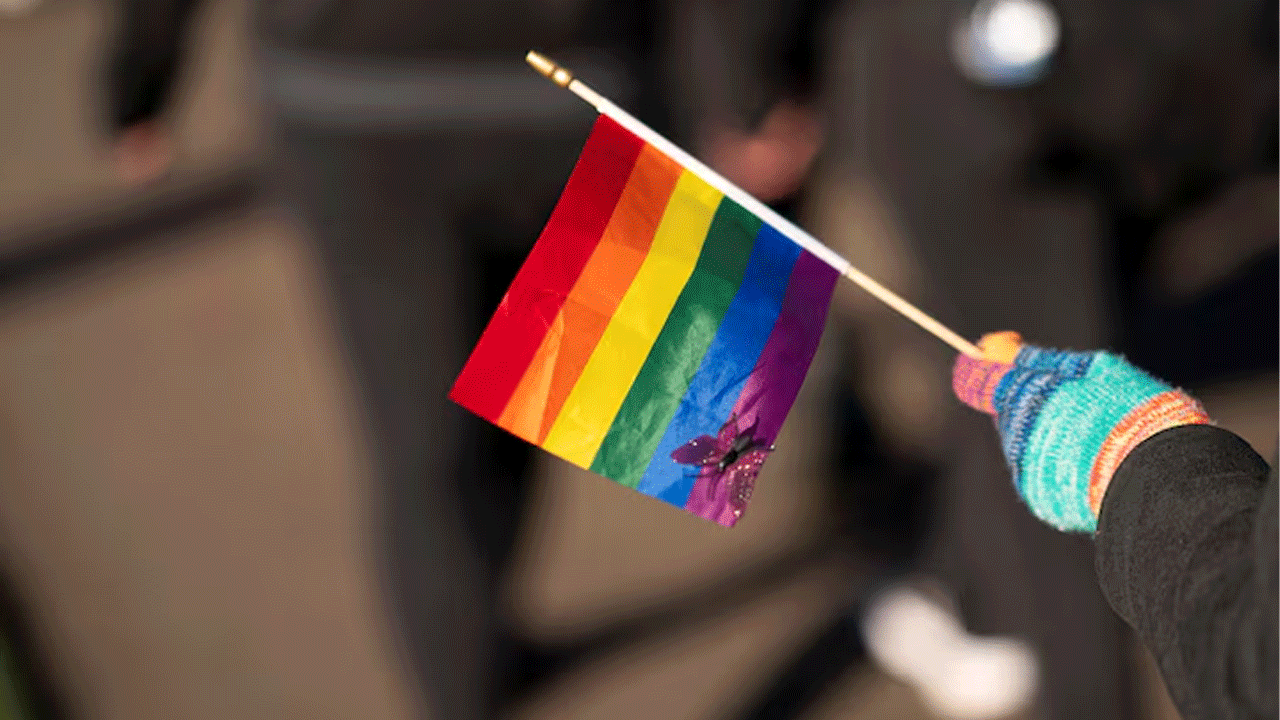
Fans will be allowed to bring rainbow flags when Egypt face Iran in Seattle’s designated “Pride Match” at the World Cup, FIFA said, echoing comments from local organisers that the symbol is one of human rights despite protests from the two competing countries.
Friday’s Group G game during Pride weekend was branded the Pride Match by Seattle’s local organising committee before December’s draw selected the two Muslim-majority countries where homosexuality is criminalised.
Egypt and Iran objected after the draw, with Egypt’s Football Association saying such events clashed with its cultural and religious values.
On Wednesday, The Athletic cited the Iranian Football Federation as saying: “No ceremonies or promotional activities associated with this movement should be present inside the stadium.” A spokesperson for the federation did not respond to Reuters requests for comment.
FIFA, however, said the World Cup is “an inclusive event that welcomes people from all backgrounds” and that rainbow flags are allowed in the stadium.
“General statements of human rights, including rainbow flags and other flags representing sexual orientation and gender identity, are permitted … and may be displayed inside stadiums,” FIFA said in Thursday’s statement.
FIFA has emphasised that the Pride celebrations are organised by Seattle’s local World Cup committee and not the global soccer body.
“There will be a FIFA World Cup match in Seattle and, on the same day, events organised by external organisations will be taking place in the city,” FIFA President Gianni Infantino told Swiss magazine Die Weltwoche in January.
“But that has nothing to do with the match itself.”
‘IT’S A HUMAN RIGHTS FLAG’
Patti Hearn, executive director of Seattle Pride, welcomed FIFA’s position, telling Reuters that “it’s a human rights flag and that’s why it’s allowed in the stadium”.
“The rainbow flag or any of the Pride flags are just a symbol of inclusivity, of community, of love – and that really isn’t offensive,” she said.
She noted the Pride celebrations were not embraced by Egypt and Iran, but added: “There are queer people everywhere and I think that if we can provide the opportunity for the world stage to see and experience what it feels like to be in a welcoming and inclusive place … I think that’s great.”
Bookda Gheisar, DEI director at the Port of Seattle, who described herself as an Iranian-American lesbian, echoed Hearn’s comments.
Gheisar said there was a contradiction in Egypt and Iran being involved in the game on Pride weekend, but that “the challenge of that contradiction has been a struggle of my own personal life for 40 years.”
“I’m certainly not alone in that,” she added.
Seattle organisers view the spotlight as a platform for promoting acceptance.
“The Pride celebration … has happened on this weekend for 50-plus years,” Hedda McLendon, from Seattle’s local World Cup organising committee, told Reuters earlier this week.
“It is going to happen this weekend, it is going to happen long after the World Cup.”