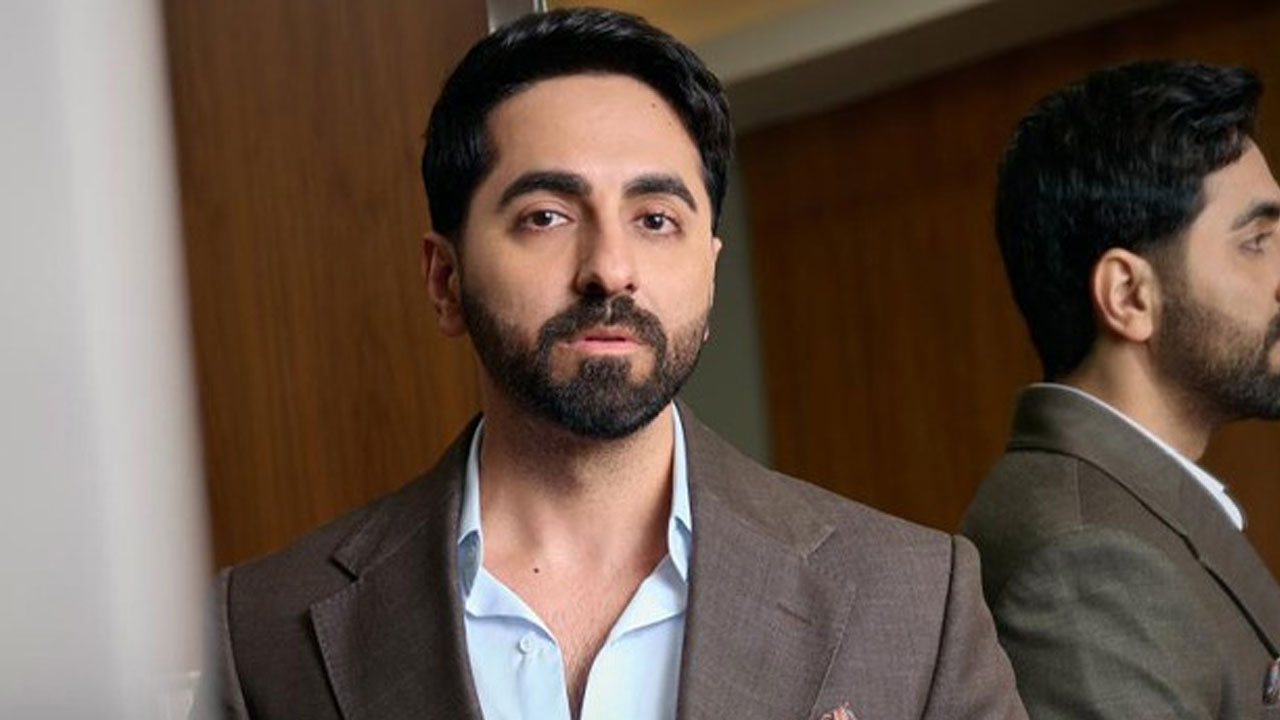
[Source: Bollywood Hungama]
For much of the past decade, whenever Hindi cinema discovered a successful genre, the instinct was understandably to make it bigger.
Romances became glossier, action films became louder, and spy films steadily evolved into enormous spectacles filled with international missions, elaborate stunts and heroes capable of taking on entire armies.
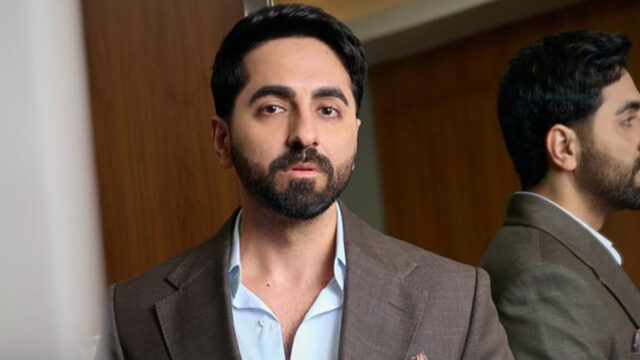
Ayushmann Khurrana’s career has usually moved in the opposite direction.
Instead of asking how a familiar genre can become bigger, some of his most successful films have asked a more interesting question: what happens if you put a completely unexpected protagonist or problem inside it?
With Udta Teer, Ayushmann may now be applying that philosophy to one of Hindi cinema’s most commercially attractive contemporary genres: the spy movie.
The basic idea itself announces that this isn’t business as usual. Ayushmann plays a Pakistani spy, but the complication is deliciously unusual: he loses his memory. Suddenly, the man who is supposed to know everybody else’s secrets is struggling with the most fundamental mystery of all: his own identity.
The trailer consequently treats espionage not merely as an excuse for action but as the foundation for comedy, mistaken identity, satire and chaos. This is classic Ayushmann territory, but there is an important distinction.
Ayushmann hasn’t simply spent his career choosing unconventional subjects.
He has repeatedly taken recognisable Hindi-film genres and altered the way the protagonist is allowed to behave within them.
Consider the romantic comedy.
When Ayushmann made Vicky Donor, the central romantic hero wasn’t defined by the usual obstacle of family status, an ex-lover or parental opposition. He was a sperm donor trying to navigate romance, secrecy and an unconventional profession.
With Shubh Mangal Saavdhan, the traditional question of whether the boy and girl would get married was replaced by a far more intimate complication surrounding male sexual performance. Yet the treatment remained accessible, humorous and deeply rooted in family dynamics.
Bala took a familiar story about romance and self-confidence and placed premature baldness at its centre.
Dream Girl transformed a comedy of mistaken identities into something even more bizarre through a man whose female voice creates a parallel persona desired by multiple strangers.
Then came Andhadhun, where even the protagonist’s relationship with the truth became slippery. Ayushmann’s apparently blind pianist wasn’t the conventional morally uncomplicated hero Hindi thrillers had conditioned audiences to expect.
The pattern becomes difficult to ignore. Ayushmann does not necessarily reject mainstream genres. He seems to enjoy entering them through the side door.
That makes Udta Teer particularly intriguing because few Hindi-film genres currently carry as many established conventions as the spy film.
The contemporary cinematic spy is usually hyper-competent.
He remembers licence plates, faces, codes, weapons, escape routes and confidential information with machine-like precision.
His appeal comes partly from the fantasy that he is always three steps ahead of everybody else.
Udta Teer appears to begin by taking away exactly that advantage. Ayushmann’s spy cannot even completely depend on his own memory.