 Reuters
[Source: Reuters]
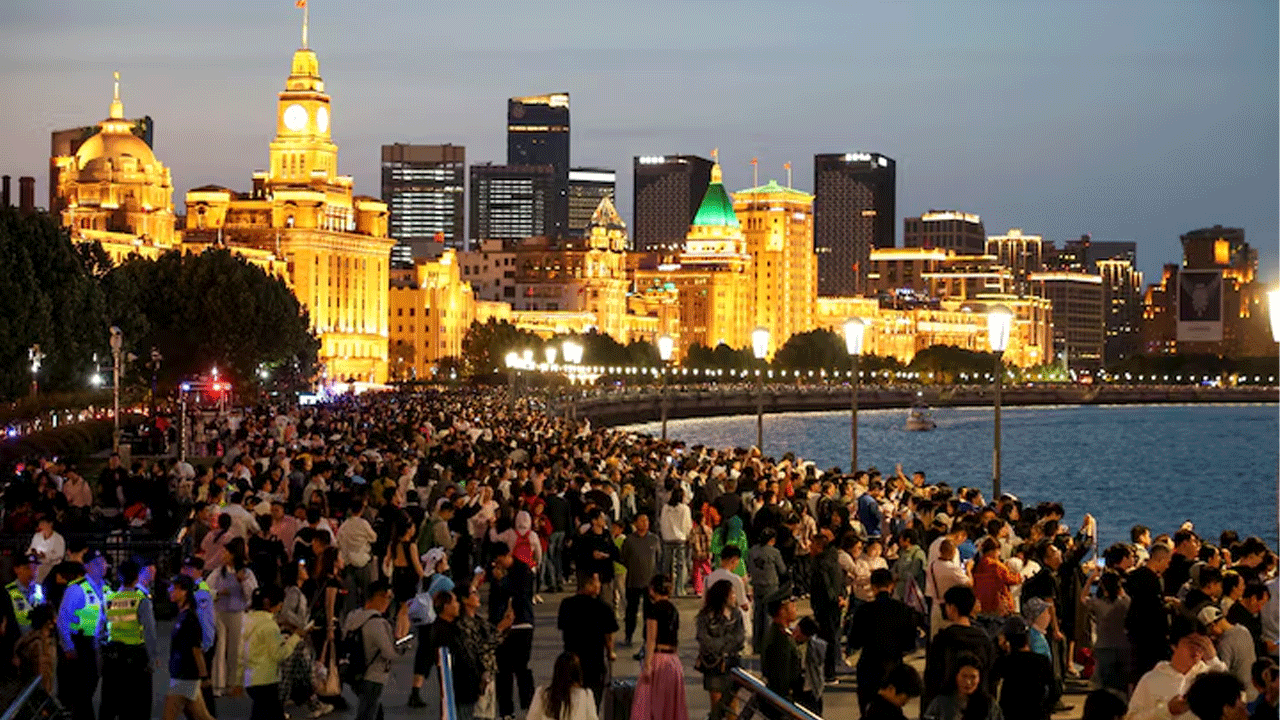
hina’s overall tourist activity increased slightly during the May Day holiday, according to official data released, but per trip spending dipped compared to last year’s holiday period.
Spending over China’s multi-day public holidays is an important marker of the country’s consumer confidence, which has suffered from a challenging economic backdrop and a prolonged property crisis, even as exports have proved resilient.
According to data from China’s Ministry of Culture and Tourism, 325 million domestic trips were taken during the May 1-5 holiday, a rise of 3.6% over last year. The total expenditure of domestic travel was 185.49 billion yuan ($27.27 billion), up 2.9% compared to a year ago.
Spending per May holiday trip fell to 571 yuan, from 574.1 yuan in 2025, Reuters calculations based on official data showed.
Since emerging from the restrictions of the COVID pandemic, China’s holiday periods have been marked by increased domestic travel, though per capita spending has lagged. In 2019, travellers spent 603.4 yuan per trip during the May holiday.
Consumer belt-tightening has contributed to ongoing deflationary pressures in the world’s second-largest economy in recent years.
Retail sales, a gauge of consumption, grew 1.7% in March, slowing from 2.8% growth in January-February and below analysts’ expectations.
“Broadly, travel has been on the upswing. There has been growth in trips and lodging bookings, as well as on food spend,” said Ben Cavender, managing director at Shanghai-based China Market Research Group.
“Having said that, it’s also very clear that consumers are still being very value driven in terms of how they spend,” he added.
According to the China Index Academy, one of China’s largest real estate data providers, new-home sales by floor area in 26 cities reached 518,000 square metres during the 2026 Labour Day holiday, up 12.5% from a year earlier.
Guangzhou, Shenzhen and Wuhan introduced stimulus measures in late April, including easing home-purchase restrictions and offering home-buying subsidies.
Their property markets became noticeably more active during the holiday, while most other cities saw relatively stable market conditions.
HOBBIES AND EXPERIENCES DICTATE DESTINATION CHOICE
Major tourist attractions and cultural sites bustled with visitors during the holiday period, as travellers flocked to both traditional hotspots and emerging destinations.
Alibaba-owned (9988.HK), travel platform Fliggy, along with social media site Xiaohongshu, also known as RedNote in English, said in a jointly released “2026 Labor Day Holiday Travel Trends Report” that interest-led itineraries focused on food and photography, for example, have become major drivers of destination choice for Chinese travellers.
Xiaohongshu data shows that 69% of users select destinations based on personal interests, while experiential products on Fliggy’s platform outpaced overall platform growth during the holiday.
H World Group (1179.HK), a hospitality company that operated more than 12,700 hotels in China last year, said holiday demand was robust and it recorded a 13.6% increase in total room nights year-on-year.
But the holiday film market – another gauge of consumer sentiment – grew far less.
According to statistics from the China Film Administration, this year’s May Day holiday total box office revenue reached 758 million yuan, with 20.8 million moviegoers, up 1.41% and 10.23% year-on-year, with no standout box-office leader emerging.
The average ticket price was 36.3 yuan, down 8% from the same period last year.