 Reuters
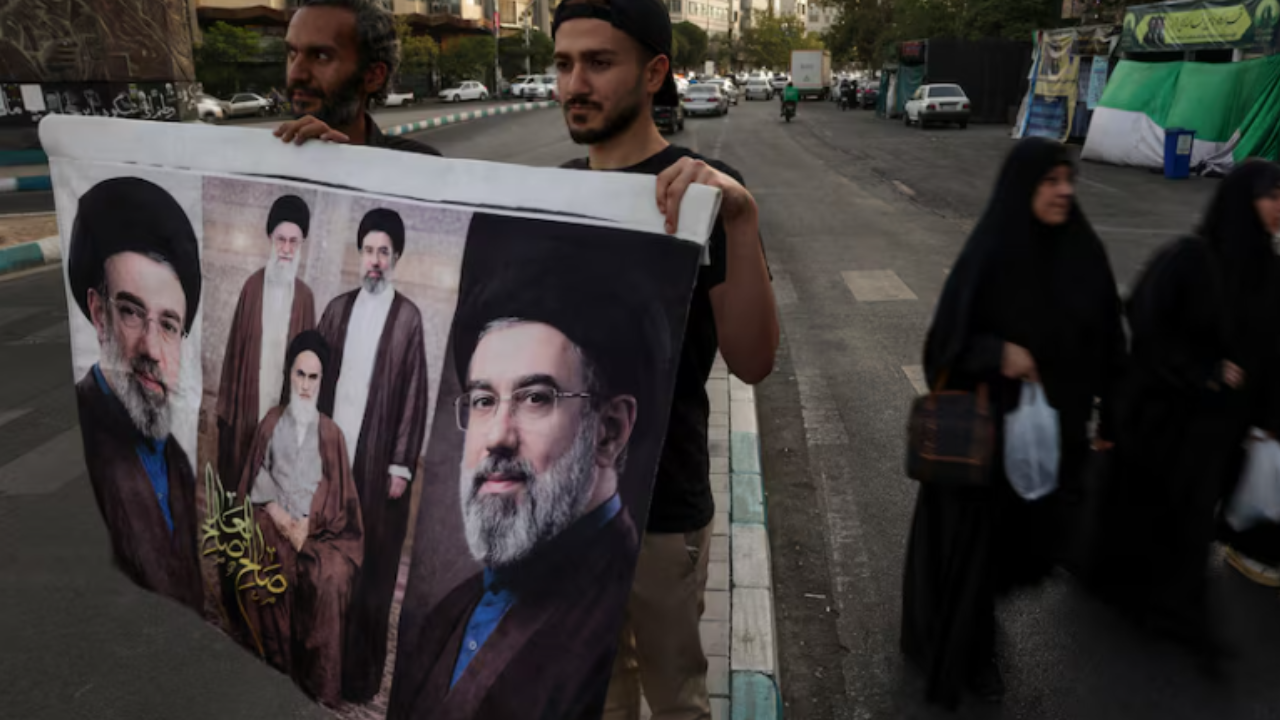
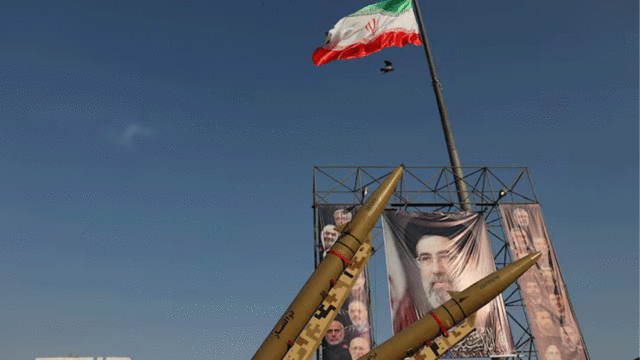
Men hold a banner depicting Iran's late leader Ayatollah Ruhollah Khomeini, Iran's late Supreme Leader Ayatollah Ali Khamenei and Iran's Supreme Leader Ayatollah Mojtaba Khamenei. [Photo Credit: Reuters]
Iran’s ruling clerics are preparing days of mass funeral rites for Ayatollah Ali Khamenei as a show of public devotion to the Islamic Republic and proof that its revolutionary fervor still burns strong.
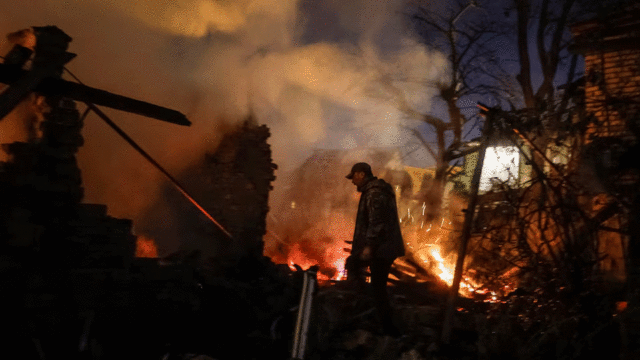
Iran’s supreme leader was killed by U.S. and Israeli strikes in their first attack of the war and the funeral events will begin over the weekend in Tehran, with mass processions planned next week in Qom and Mashhad and ceremonies in Iraq.
If they do see it as a referendum, authorities are not leaving the result to chance.
They hope to mobilise millions of supporters to flood Iran’s cities, laying on transport, accommodation and food, to proclaim the might of their theocratic state after it survived what they saw as an existential war.
Khamenei’s death, and the succession of his son Mojtaba as Iran’s third supreme leader, in a conflict with its greatest foes, mark an epochal moment in the Islamic Republic’s 47-year history. Mojtaba, dangerously wounded in the strike that killed his father, has not been seen in any new image since the war began.
But behind the veneer of unity and devotion, public support for the Islamic Republic has worn paper thin, analysts say.
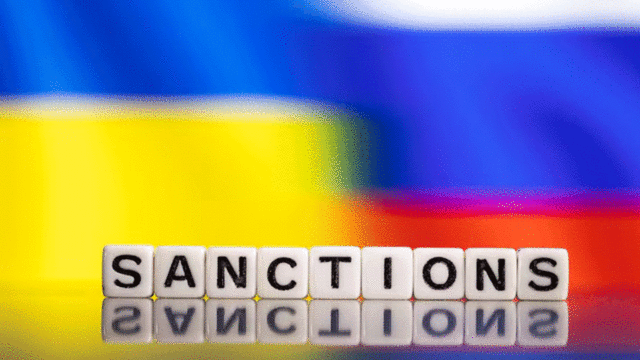
Across the country, many Iranians are tired of decades of sanctions throttling their economy and angry at the repression meted out in the name of a 1979 revolution that only older people in a mostly young population can remember.
When people poured onto the streets in December and January in demonstrations triggered by inflation, many were chanting for the death of Khamenei and authorities could only crush the unrest by shooting thousands of protesters.
After news of Khamenei’s killing began to circulate in the first days of the war, Tehran residents reported sounds of cheering erupting from behind the windows of houses and apartments in parts of the city.
Now Tehran is tense and quiet, a sharp contrast with the emotional last burial of a supreme leader — the father of the revolution Ayatollah Ruhollah Khomeini.