 Litia Cava

[Photo: FILE]
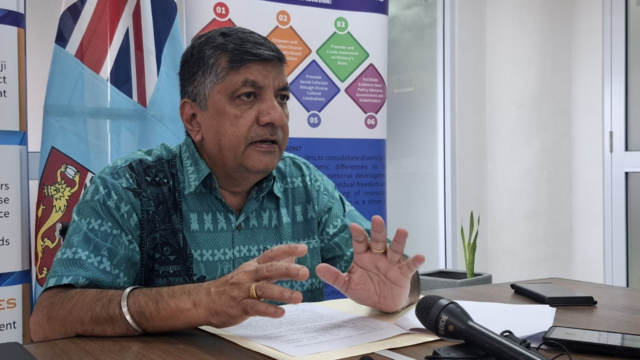
The World Bank Group is seeking to mobilise more private investment for development as governments face tighter budgets, rising debt and growing demands for essential infrastructure.
World Bank Group President Ajay Banga says the institution mobilised US$112 billion in private capital last year, up from about US$35 billion in the 2022 financial year.
He states that the increase reflects changes to how the Bank works with governments, businesses and investors, with the aim of using limited public resources to attract greater private financing.
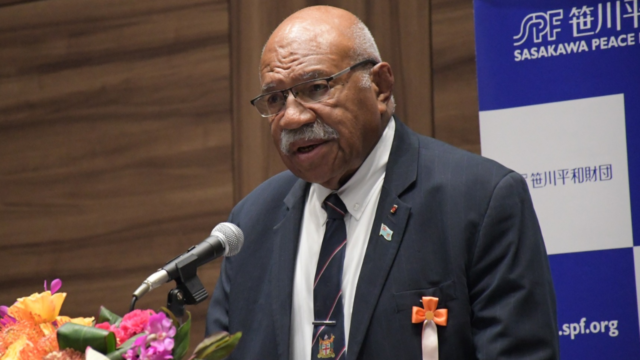
Speaking at the 2026 Annual Meetings in Bangkok, Thailand, Banga says total financing exceeded US$230 billion when the Bank Group’s own financing was included.
However, he acknowledges that progress has been uneven. Private capital mobilisation nearly tripled in lower-middle-income countries and quadrupled in upper-middle-income countries, while it more than doubled across Africa.
In low-income countries, where commercial investment is harder to attract, mobilisation remained flat.
The distinction matters for Fiji and Pacific island economies, which need financing for infrastructure, energy, water security and climate resilience but may struggle to attract investment at the scale required.
For smaller economies, the question is not simply how much money is available. It is also whether projects are commercially viable, risks can be managed and investors have confidence in the policy environment.
Banga adds that businesses need strong institutions, good governance and clear rules. He also points to guarantees, equity financing and local-currency financing as tools that can help address barriers to private investment.
The World Bank is also working with other multilateral development banks to reduce duplication and make it easier to finance projects jointly.
Banga said the number of projects on the Bank’s digital co-financing platform has tripled in two years to about 250 projects seeking US$138 billion in financing.
Another initiative involves six multilateral development banks developing common systems to assess, document, package and transfer investments.
The aim is to allow long-term investors, including pension funds, insurers and sovereign wealth funds, to take on projects initially financed by development banks. This would free up development finance for other projects.
Banga said the approach could help establish an emerging-market development asset class and allow development banks to finance more projects without relying solely on expanding their own balance sheets.
For Fiji and the wider Pacific, the approach could provide another way to finance major projects if suitable investment structures can be developed.
However, greater private sector participation does not remove the need for public financing. Banga says public and concessional finance will remain essential where needs and risks are greatest, while private investment should play a larger role as economies become stronger.
That distinction is important for Pacific communities where essential services may not generate the commercial returns investors require.
The challenge for governments will be to attract private capital without leaving projects that are vital to public welfare unfunded.
Banga said development financing must evolve with countries’ needs, combining public money, private investment, philanthropy and technology.